Perched in the Hoang Lien Son Mountains, Sapa is famous for its misty peaks, but the true soul of this highland town lies in its kitchens. Sapa Vietnam food is a rugged, aromatic reflection of the ethnic minority cultures—such as the H’mong and Red Dao—that call these slopes home. From sizzling “horse hotpot” to salmon caught in icy mountain streams, the Sapa cuisine experience is unlike anything you’ll find in the bustling streets of Hanoi.
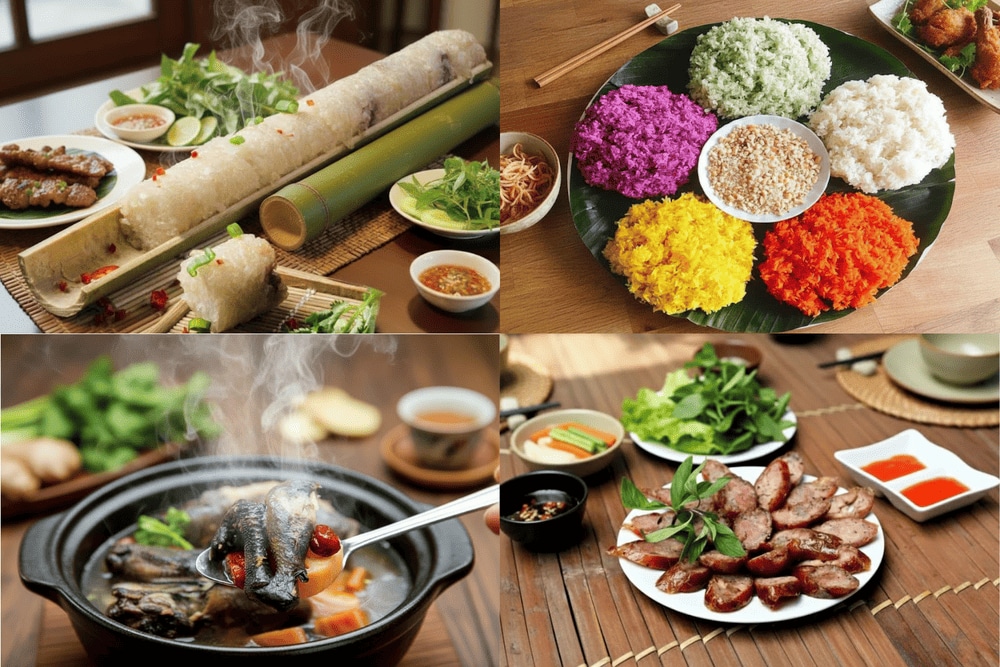
Sapa Vietnam food
The Essence of Sapa Vietnam Food
When travelers think of Vietnamese food, Pho and Banh Mi usually take center stage. However, the high-altitude climate of the northwest creates a unique ecosystem of ingredients. Sapa Vietnam food relies heavily on forest-foraged herbs, fermented bamboo shoots, and “stolen-arm” pigs.
The cold weather also dictates the style of cooking. You won’t find many refreshing cold salads here; instead, the local Sapa cuisine focuses on heat—both from the stove and from spicy mountain peppers—to keep the body warm against the mountain chill.
Why Sapa Cuisine is Unique
The uniqueness of the food here comes from the intersection of geography and ethnography. With over 20 different ethnic groups, each meal tells a story of survival and celebration in the rugged highlands. The use of “Mac Khen” (mountain pepper) and “Hat Doi” (forest seeds) gives Sapa Vietnam food a flavor profile that is impossible to replicate in the lowlands.
Top 7 Must-Try Dishes in Sapa Cuisine
To truly understand the local culture, you have to eat like a local. Here are the definitive dishes that define Sapa Vietnam food.
1. Thang Co (Traditional Horse Meat Hotpot)
Perhaps the most famous—and controversial—dish in the region is Thang Co. Traditionally made by the H’mong people, it is a hearty stew of horse meat, blood, and viscera.
- The Flavor: It is seasoned with nearly 30 different spices, including cardamom, star anise, and cinnamon.
- The Experience: While the scent is pungent, the taste is earthy and rich. It is the quintessential Sapa Vietnam food for those seeking an authentic cultural immersion.
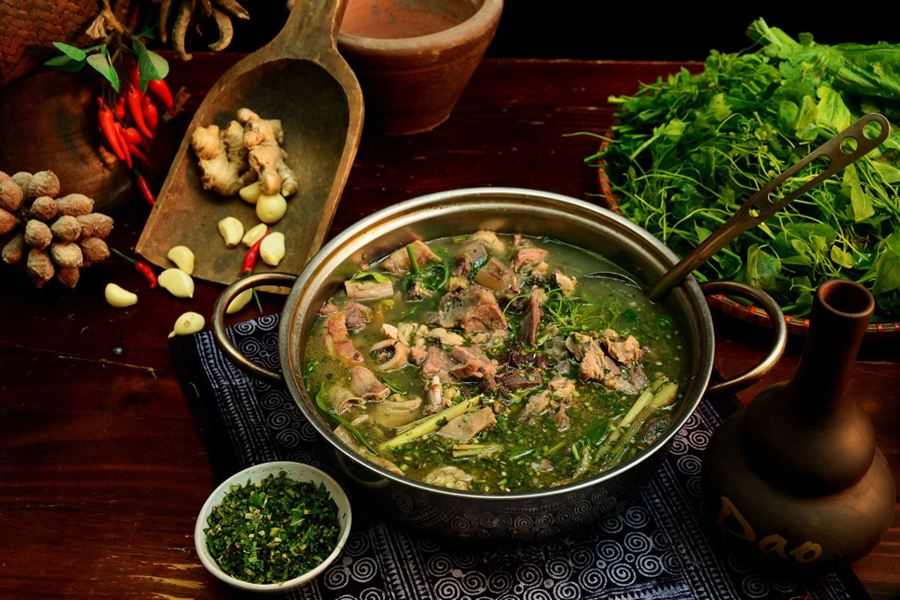
Sapa Thang Co
2. Salmon and Sturgeon Hotpot
You might be surprised to find cold-water fish in Southeast Asia, but Sapa’s climate allows for thriving salmon and sturgeon farms at the foot of Silver Waterfall.
- The Broth: Usually served as a sour hotpot with wild pineapple, tomatoes, and local herbs.
- Why it’s unique: This isn’t the fatty Atlantic salmon you’re used to; it’s leaner and firmer, making it a highlight of modern Sapa cuisine.
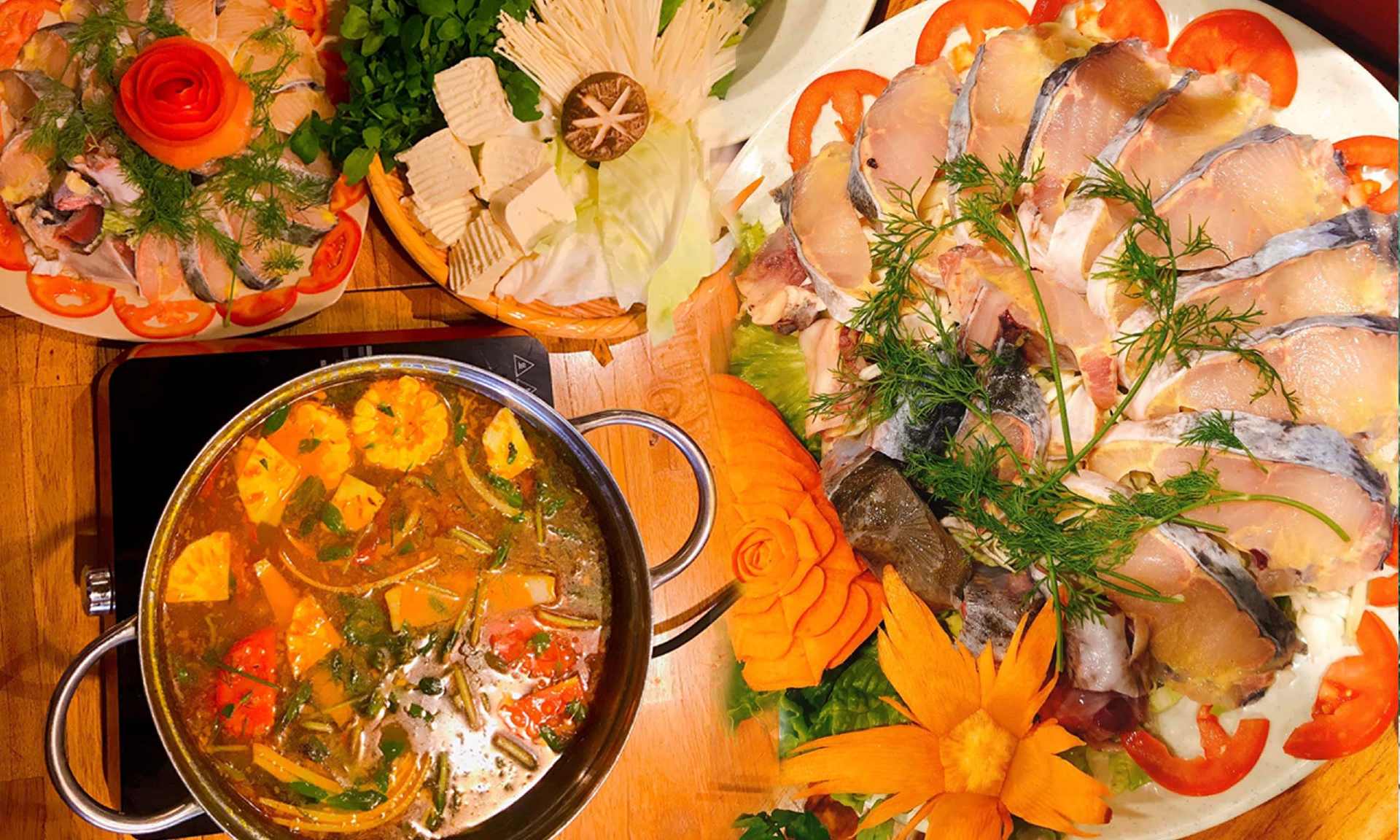
Sturgeon Hotpot
3. Lon Cap Nach (Stolen-Arm Pig)
The name comes from the tradition of locals carrying these small, free-range pigs under their arms to the market.
- The Texture: Because the pigs roam the mountains eating wild plants, the meat is incredibly lean and fragrant.
- Preparation: Usually roasted whole over charcoal until the skin is glass-crackle crispy, this is a staple of Sapa Vietnam food festivals.
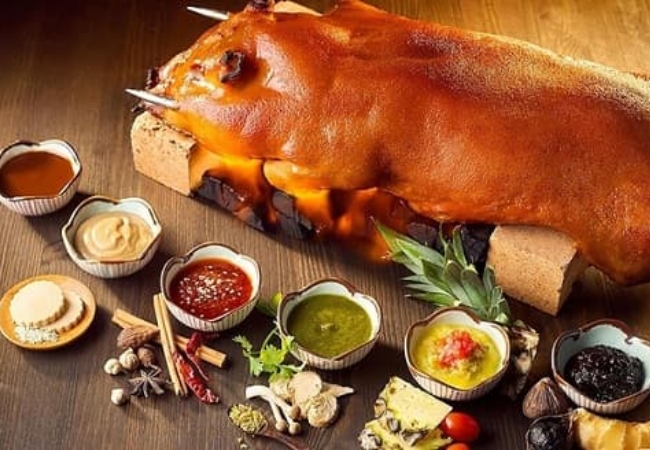
Lon Cap Nach (Stolen-Arm Pig)
4. Thit Trau Gac Bep (Smoked Buffalo Meat)
Originally a way for the Black H’mong to preserve meat through the long winter, this is now a premium delicacy in Sapa cuisine.
- Process: Buffalo meat is marinated with chili, ginger, and “Mac Khen,” then hung over the kitchen hearth for months.
- Taste: It has a deep smoky aroma with a spicy kick that pairs perfectly with local corn wine.
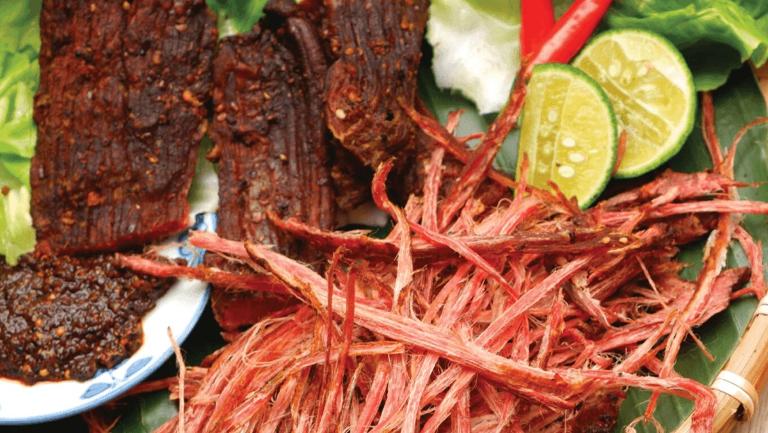
Smoked Buffalo Meat
5. Com Lam (Bamboo Tube Rice)
This is the soul of the mountains. Sticky rice is stuffed into bamboo tubes and roasted over embers. When cracked open, the rice has a thin, charred membrane and a subtle woody aroma. It is the perfect accompaniment to grilled pork or chicken in the Sapa cuisine repertoire.
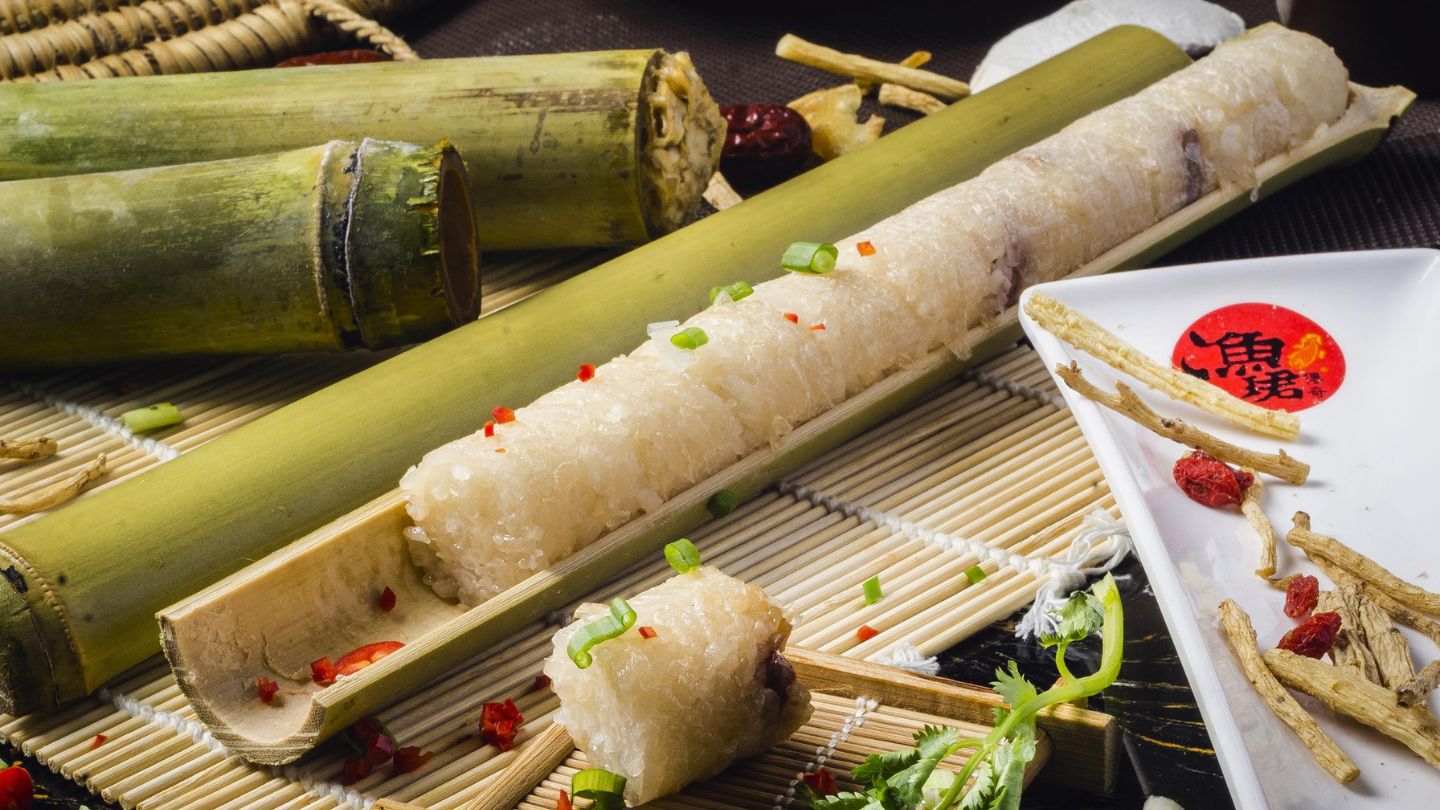
Com Lam (Bamboo Tube Rice)
6. Men Men (Steamed Corn Meal) – An Iconic Highland Staple
If you visit a H’mong village, you will likely encounter Men men, a dish that represents the resilience of the mountain people. As maize is the primary crop in the rocky highlands, it serves as the foundation for this Sapa Vietnam food specialty.
- The Craft: After the corn harvest, the kernels are dried and ground into a fine powder. This meal is mixed with water and steamed twice in a large pan until it reaches a fluffy consistency.
- How to Enjoy: It boasts a natural, subtle sweetness. Locals often enjoy it crumbled into bowls of pumpkin soup or bone broth. For a more intense flavor, try it with a bit of spicy chili sauce and fresh herbs to truly appreciate the rustic side of Sapa cuisine.
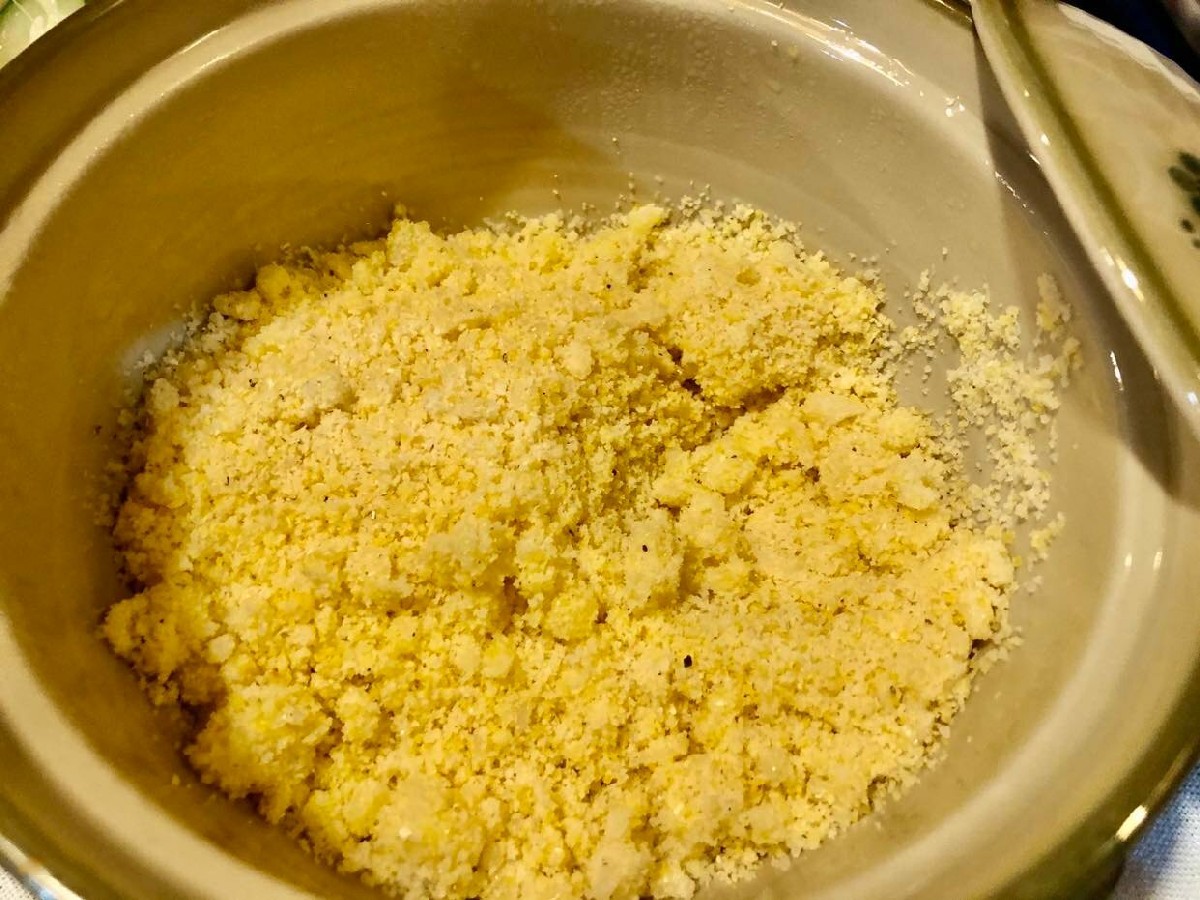
Men Men Sapa
7. Mam Da Vegetable – The Rare Gem of the Peaks
Known as a seasonal “superfood” of the northwest, Mam da is a rare vegetable that grows only on the highest, frost-bitten rocky peaks. It is a prized ingredient in the world of Sapa Vietnam food.
- The Flavor Profile: While it looks somewhat like a cluster of broccoli or asparagus, it has a much more refined fragrance and a noticeably sweeter aftertaste.
- Cooking Styles: To preserve its natural crunch and “mountain soul,” it is most commonly boiled and served with a simple boiled egg and fish sauce dip. However, it is also incredible when stir-fried with beef or mushrooms, adding a sophisticated touch to any Sapa cuisine dinner table.
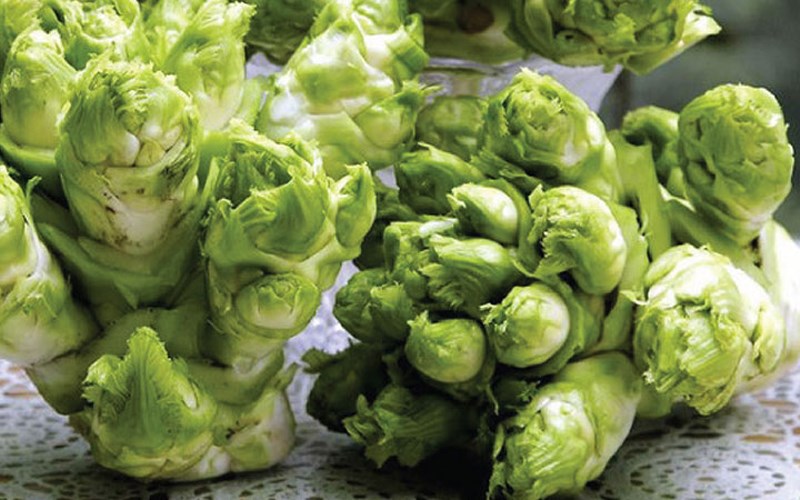
Mam Da Vegetable
How to Experience Sapa Cuisine Like a Local
To get a full 360-degree view of Sapa Vietnam food, you need to vary your dining locations.
1. The Weekend Markets
If your visit coincides with the weekend, head to the Bac Ha or Can Cau markets. Here, Sapa cuisine is served in its rawest form. Large communal tables are surrounded by locals in colorful traditional dress, sharing bowls of noodles and shots of potent corn wine.
2. Homestay Dining
For the most authentic Sapa Vietnam food, stay at a homestay in Ta Van or Ban Ho village. You will sit on the floor around a communal tray, sharing dishes prepared by the family using ingredients from their own garden and livestock.
Essential Spices That Define Sapa Cuisine
What makes Sapa Vietnam food taste so distinct? It’s the indigenous spices:
- Mac Khen: Often called “mountain pepper,” it has a numbing sensation similar to Sichuan peppercorns but with a citrusy scent.
- Hat Doi: Known as the “black gold” of the forest, these seeds are toasted and ground to provide a deep, earthy flavor.
- Muong Khuong Chili Sauce: A fermented sauce made from local chilies, garlic, and cinnamon, adding a fiery depth to Sapa cuisine.
Tips for Foodies Visiting Sapa
- Drink the “Happy Water”: Local corn wine (Ruou Ngo) is a staple of Sapa Vietnam food culture. It’s strong, so sip slowly!
- Seasonality Matters: Visit in the winter for hotpots and grilled meats, or in the spring for fresh forest shoots and wild flowers.
- Food Safety: Stick to busy stalls in the market to ensure the Sapa cuisine you are eating is freshly prepared.
Conclusion
Exploring Sapa Vietnam food is about more than just filling your stomach; it’s about understanding the resilience and creativity of the mountain people. From the first sip of tart salmon broth to the smoky finish of grilled bamboo rice, Sapa cuisine offers a complex, rewarding journey for any food lover.
When you plan your trip to the northern highlands, make sure your itinerary includes as many meals as it does treks. After all, you haven’t truly seen Sapa until you’ve tasted it.
————–
SJourney
Hotline (Phone/whatsapp): +84-975-119-466
Email: inquiry@vietnamluxuryexpress.com
Head office: No. 15/52 Giang Van Minh, Ba Dinh, Hanoi

The Travel Story Team is the editorial group behind Vietnam Luxury Express — passionate storytellers and travel enthusiasts dedicated to sharing the art of luxury train journeys across Vietnam.