Heritage Hue represents one of Southeast Asia’s most significant cultural landscapes, preserving the legacy of Vietnam’s last imperial dynasty. This guide explores Hue’s UNESCO World Heritage value, from the Imperial City and royal mausoleums to sacred pagodas and ceremonial spaces. Through history, architecture, and geomantic planning, readers gain professional insight into why Hue stands as an exceptional example of 19th-century feudal urbanism in East Asia.
History of Heritage Hue
Established in 1802 under Emperor Gia Long, Hue served as the Nguyen Dynasty’s political and cultural heart until 1945. Its architecture follows strict cosmological principles, aligning with the Five Cardinal Points and Elements. The Citadel’s layout integrates natural protection, utilizing the Perfume River and hills as “blue dragon” and “white tiger” guardians. Despite damage from wars and floods, its 1993 UNESCO World Heritage inscription recognizes it as an outstanding eastern feudal capital.
Why Hue is a UNESCO World Heritage Site
Hue’s status as a UNESCO World Heritage Site, inscribed in 1993, is rooted in its Outstanding Universal Value as a remarkably preserved 19th-century feudal capital.
The site is an exceptional specimen of late feudal urban planning in East Asia. It was constructed in a remarkably short period during the early 19th century as a fully defended capital, maintaining high integrity in its layout and monumental arts.
The city’s design is intimately mingled with its environment. The Perfume River and Ngu Binh Mountain (the “Royal Screen”) are not just scenic; they are functional and symbolic elements that define the city’s geomantic protection.
Unlike many other contemporary East Asian capitals, Hue’s design harmonizes traditional Vietnamese principles with ancient oriental philosophy and specific Western military architecture (Vauban style), making it unique in its regional context.
Top 10 Heritage Sites in Hue
Hue’s heritage is protected as the single “Complex of Hue Monuments” UNESCO World Heritage Site, which encompasses numerous individual historical landmarks.
Here are 10 top heritage sites within this complex:
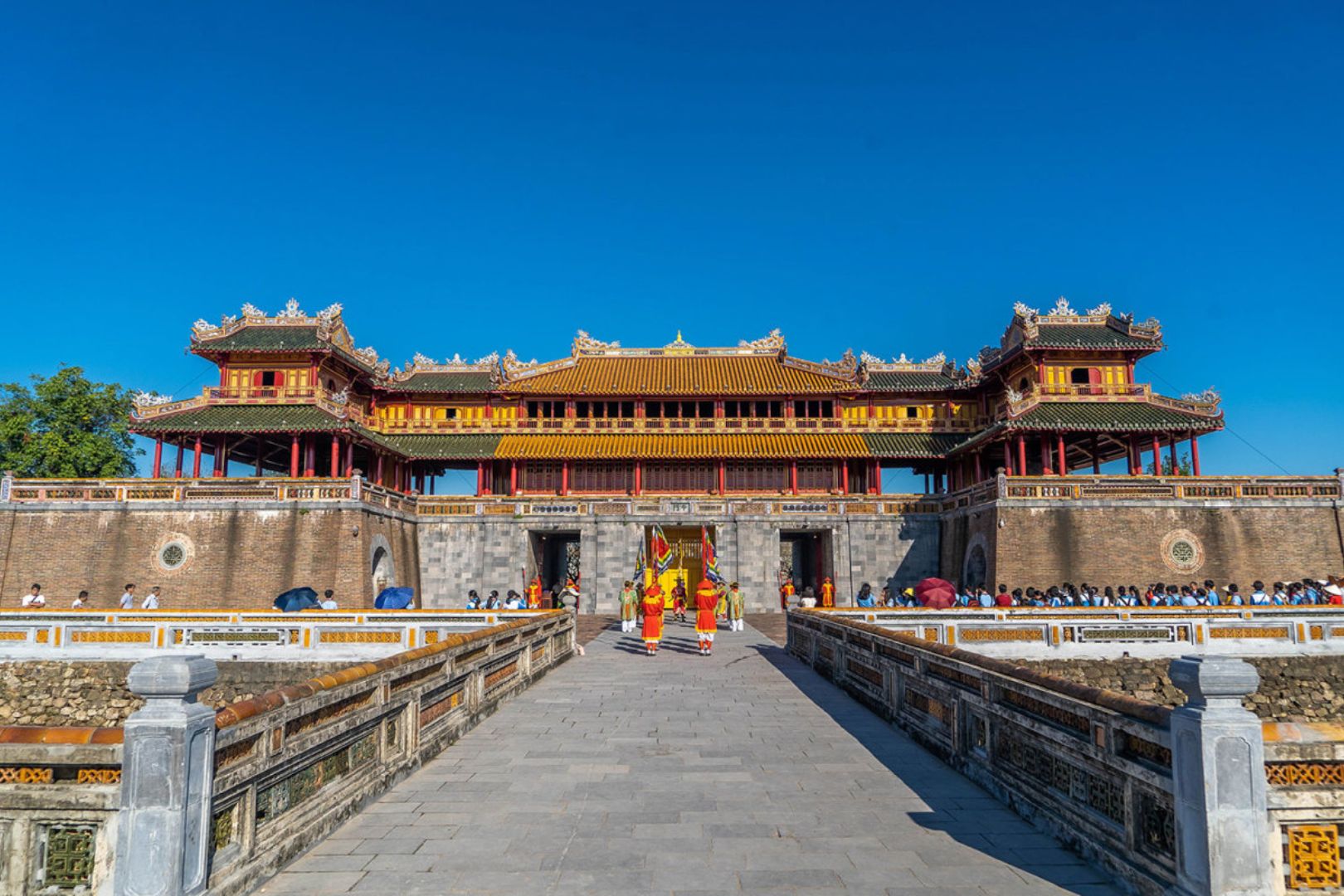
Imperial City (Dai Noi)
- Description: The heart of the former imperial capital, this vast, fortified area within the Citadel (Kinh Thanh) was the political and administrative center of the Nguyen Dynasty from 1802 to 1945. It contains numerous palaces, temples, and the private living quarters of the royal family (the Forbidden Purple City).
- Highlight: The grand Meridian Gate (Ngo Mon), the main southern entrance, is an architectural masterpiece and symbol of royal authority. The Hall of Supreme Harmony (Thai Hoa Palace), where major court ceremonies took place, is another key highlight.
Visitor tips: Plan several hours to explore the extensive grounds; much of the Forbidden Purple City is in ruins, so focus on the well-restored areas. A combined ticket for multiple sites is often available and can be cost-effective.
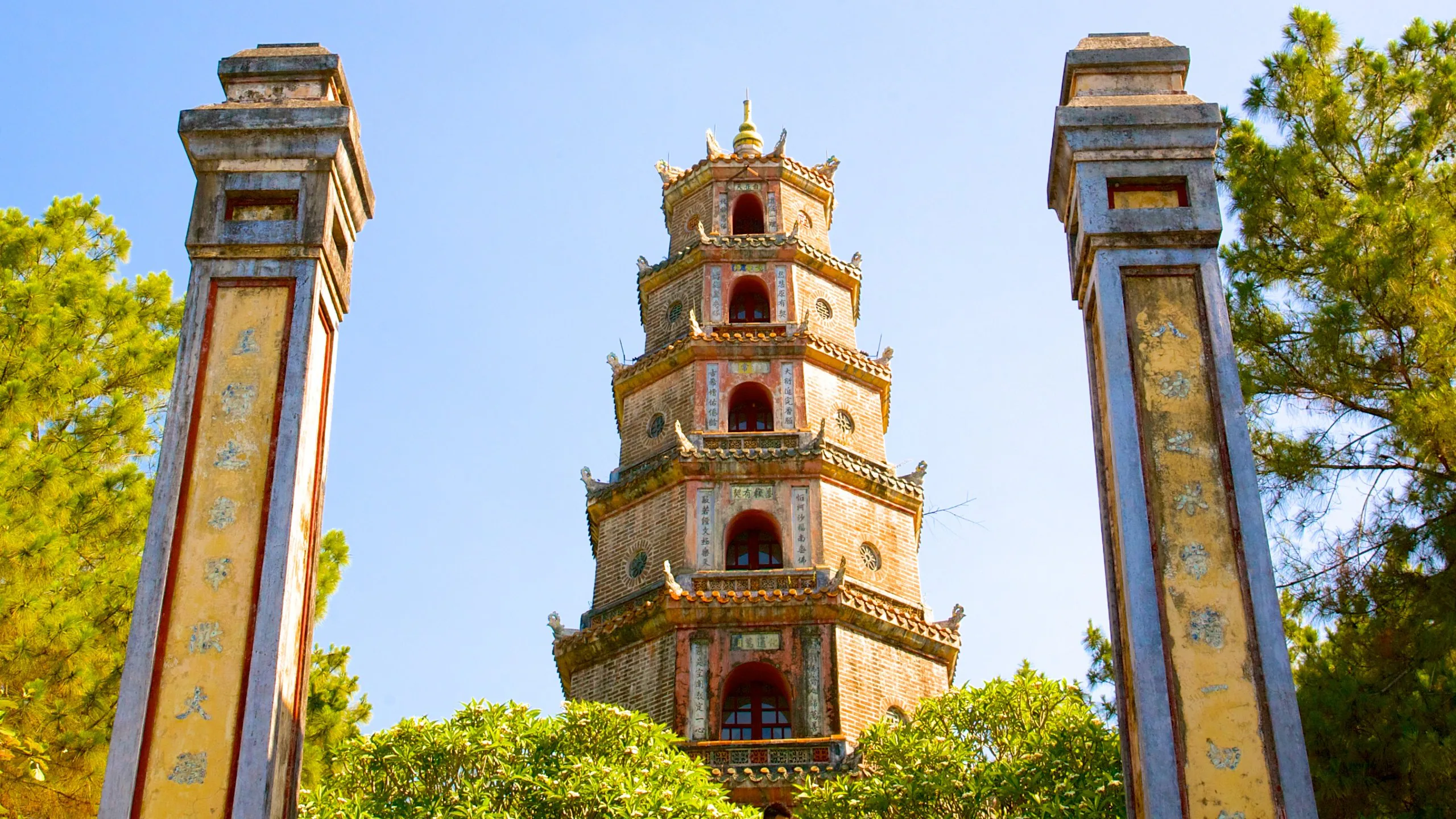
Thien Mu Pagoda
- Description: An iconic seven-tiered pagoda built in 1601 on the banks of the Perfume River, Thien Mu pagoda is the oldest religious structure in Hue and an important spiritual site.
- Highlight: The seven-story Phuoc Duyen tower is the pagoda’s most famous feature and a symbol of the city itself. The site also played a significant role in modern Vietnamese political history during the 1960s Buddhist crisis.
- Visitor tips: Take a scenic dragon boat trip along the Perfume River to reach the pagoda for a traditional and picturesque arrival. The best views of the pagoda are often from the river.
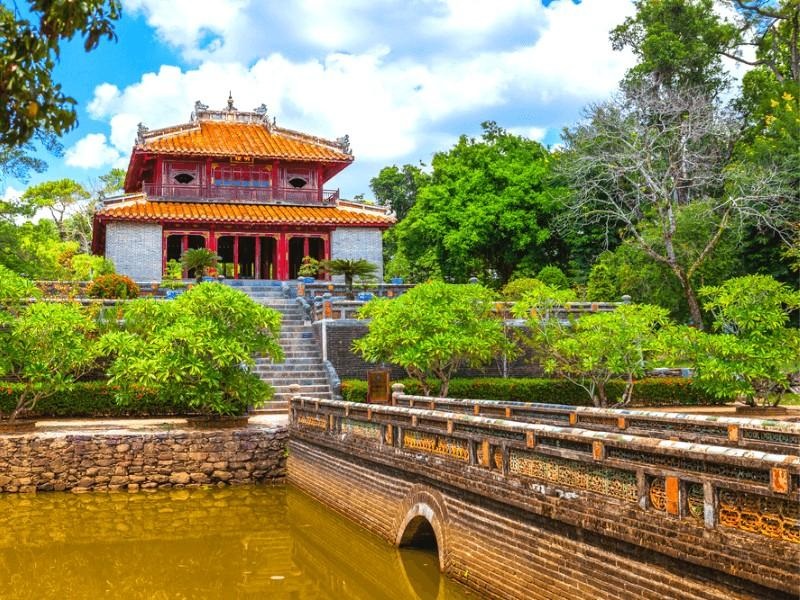
Mausoleum of Emperor Minh Mang
- Description: This tomb is renowned for its symmetrical and majestic design, perfectly integrating architecture with the natural landscape of mountains and a lake. It reflects the emperor’s powerful and solemn nature.
- Highlight: The meticulous layout, serene courtyards, beautiful pavilions, and precise alignment of the structures within a vast, natural setting create a harmonious and impressive scene.
- Visitor tips: The site is large, so comfortable walking shoes are recommended. It is a bit outside the city center, so hiring a driver or a tour is practical.
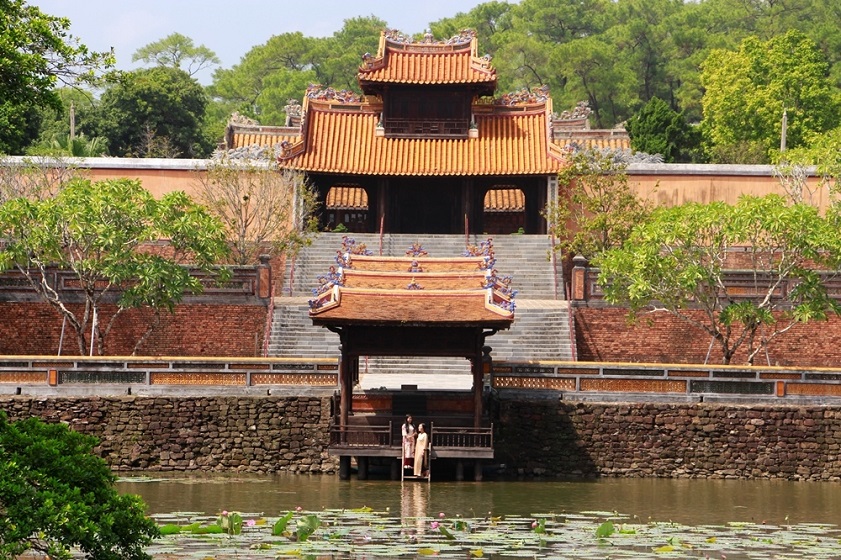
Tomb of Emperor Tu Duc
- Description: The most poetic and artistic of the royal tombs, designed by Emperor Tu Duc himself as a serene summer palace and an eternal resting place
- Highlight: The complex is known for its elegant pavilions, tranquil lotus ponds, and a harmonious blend of man-made and natural elements, showcasing the emperor’s love for poetry and nature.
- Visitor tips: This is a peaceful place to wander and relax. Allow plenty of time to soak in the atmosphere. Interestingly, the emperor was not actually buried here; his exact burial spot remains a mystery.
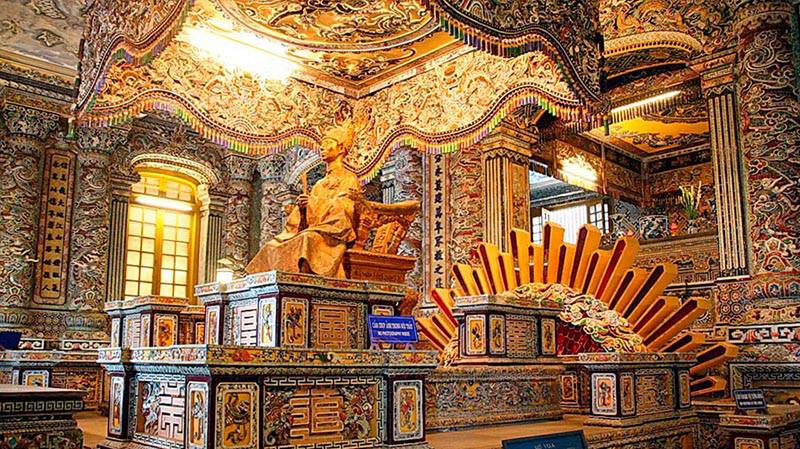
Tomb of Emperor Khai Dinh
- Description: A striking blend of Eastern and Western architectural styles, this tomb stands out from the others with its grey concrete exterior and incredibly ornate internal decorations.
- Highlight: The intricate mosaic work inside, using porcelain and glass, is a stunning display of extravagance and detail, reflecting the short-reigning emperor’s eccentric tastes.
- Visitor tips: The tomb requires climbing many stairs, so be prepared for a physical ascent. It’s a popular spot for photos due to its unique appearance.
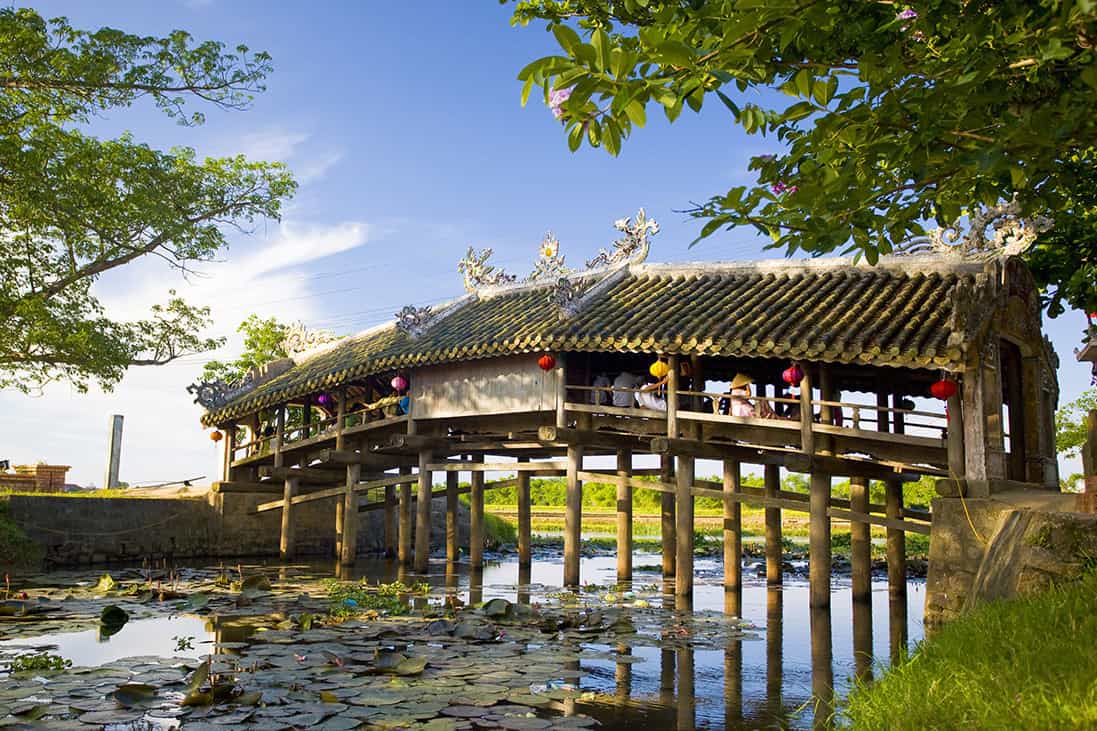
Thanh Toan Tile-roofed Bridge
- Description: A beautiful, old, wooden arched bridge with a tiled roof, located in a village just outside of the main city. It was built in 1776 by a local woman for the community.
- Highlight: Its unique architecture, which includes a small shrine on the bridge itself, offers a picturesque glimpse into traditional rural Vietnamese life.
- Visitor tips: This is a great spot for a short trip to see a less crowded, more local attraction. It’s a perfect photo opportunity and can be combined with a visit to the nearby village market.
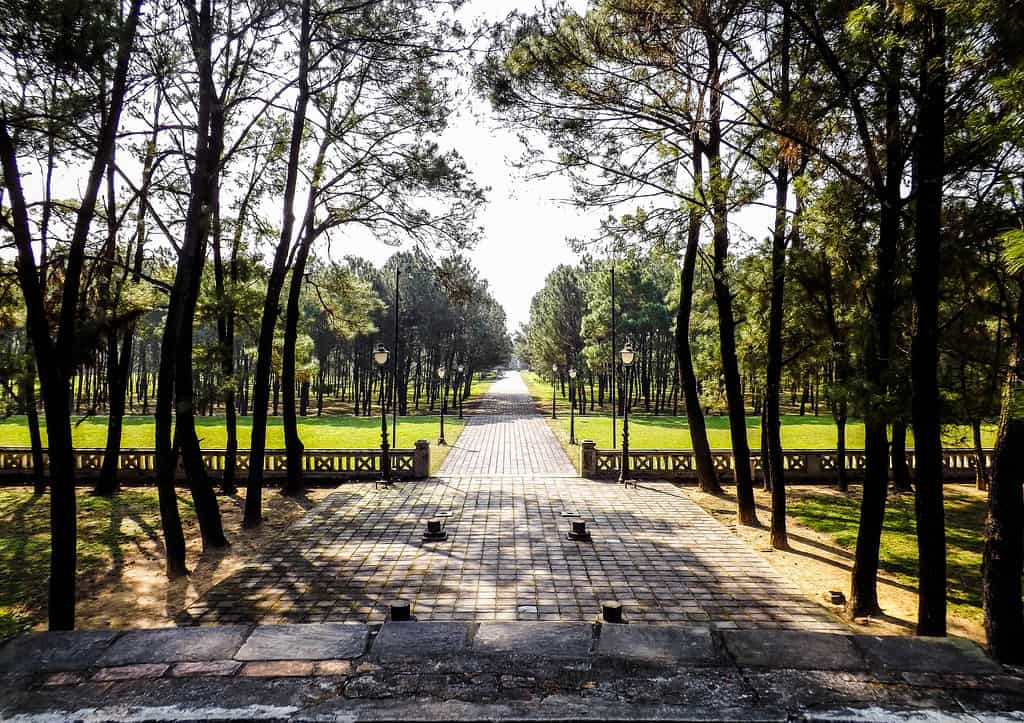
Nam Giao Esplanade
- Description: A large, open-air complex of altars where the Nguyen emperors performed the most important imperial rituals: the sacrifice to the Earth and Heaven.
- Highlight: The solemn and expansive circular altars are a powerful representation of the dynastic belief system and a unique architectural form.
- Visitor tips: The esplanade is vast and simple, so it might lack the visual flair of the tombs or citadel for some visitors, but it holds immense cultural and historical significance.
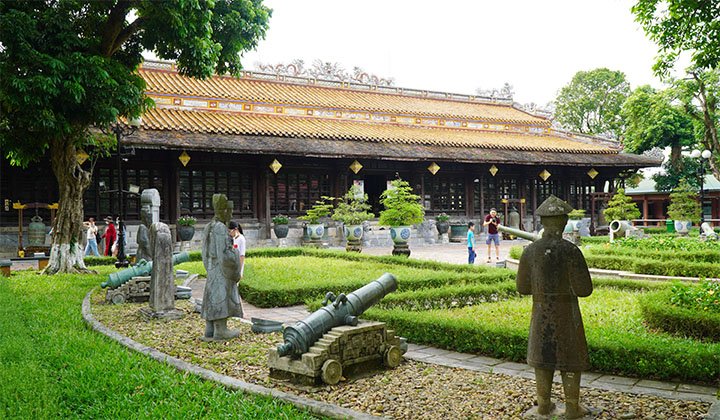
Hue Museum of Royal Fine Arts
- Description: Located within an imperial-era wooden building, the museum houses over 10,000 artifacts from the Nguyen Dynasty, including royal costumes, ceramics, and lacquerware.
- Highlight: The extensive collection provides an intimate look into the daily life, arts, and culture of the imperial court.
- Visitor tips: This museum is a great supplement to visiting the main historical sites, offering context and detailed exhibits of the objects used in the palaces and tombs.
Nine Dynastic Urns
- Description: Located in front of the Hien Lam Pavilion within the Imperial City, these nine massive bronze urns were cast in 1835, each representing an emperor.
- Highlight: The detailed carvings on each urn depict a rich array of Vietnamese natural symbols, and they represent the stability and power of the Nguyen Dynasty.
- Visitor tips: These are best viewed with a guide or informational plaque to understand the meaning behind each specific carving and the overall symbolism.

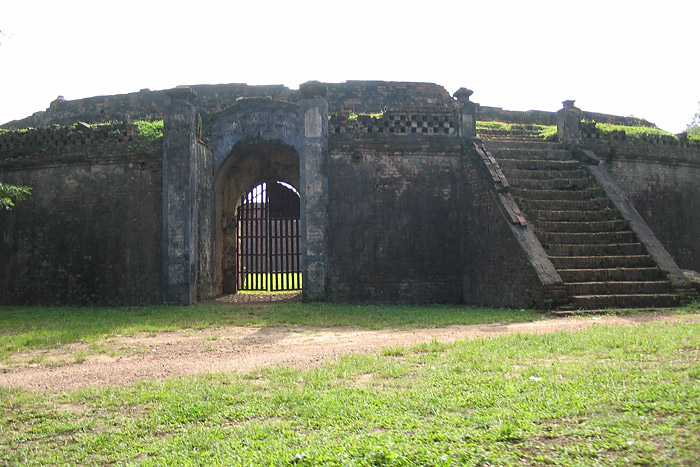
Royal Arena (Ho Quyen)
- Description: An ancient colosseum where elephant and tiger fights were staged for the entertainment of the emperor and the court.
- Highlight: This is a unique historical site, the only one of its kind in Vietnam, offering a glimpse into the more unusual aspects of imperial court life.
- Visitor tips: It is a lesser-known, slightly off-the-beaten-path attraction, so you might experience fewer crowds. The architecture is interesting for its historical function.
>>> Read more: Discover Top Hue Tourist Attractions in 2026: The Ultimate Travel Guide
Transportation Options to visit heritage Hue
Transportation from Northern Vietnam to Hue
By Plane
This is the fastest option, with a flight time of around 1 hour and 10 minutes from Hanoi’s Noi Bai International Airport (HAN) to Hue’s Phu Bai International Airport (HUI). Airlines such as Vietnam Airlines and VietJet Air operate daily direct flights. From Phu Bai Airport, you can take a taxi, ride-hailing service, or a shared shuttle bus to the city center (a 30-minute drive). You can search for flights on the Vietnam Airlines website or on Google Flights.
By Luxury Train – Sjourney: The Luxury Train to Hue
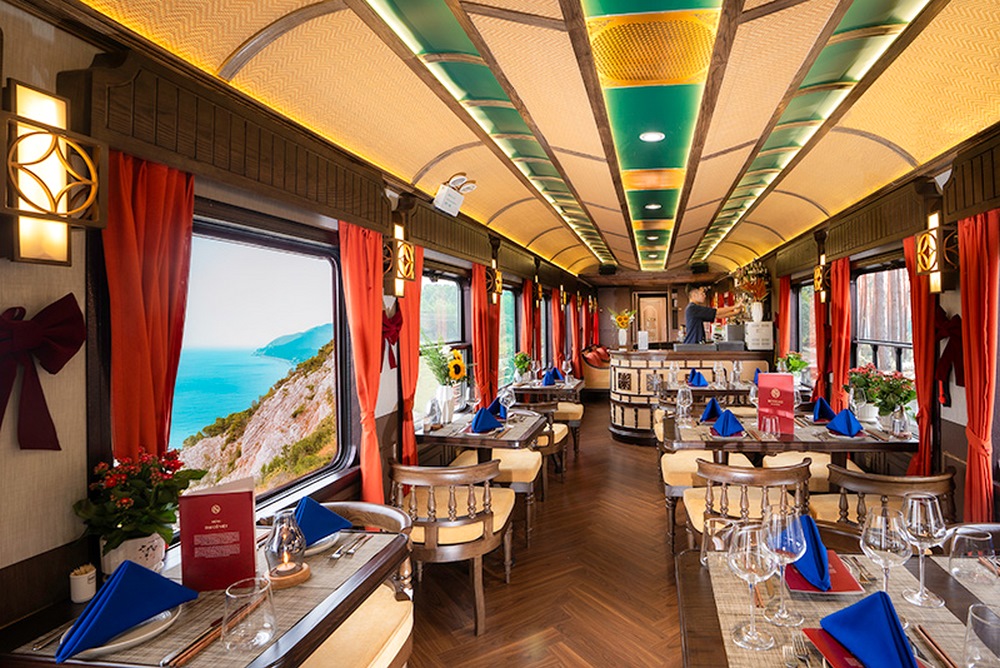
For travelers seeking a refined, immersive, and experiential journey, the Sjourney Luxury Train offers a distinctive alternative that combines transportation with high-end hospitality.
The Sjourney luxury train operates as part of an exclusive multi-day rail experience connecting Hanoi to Ho Chi Minh City, with Hue as one of its most culturally significant stops. The segment from Hanoi to Hue is particularly noteworthy, as it passes through some of Vietnam’s most scenic landscapes, including coastal views, mountains, and historic regions.
Highlights of the Sjourney Train to Hue:
- Elegant, Indochine-inspired carriages with spacious cabins and premium interiors
- Personalized service comparable to a luxury hotel on rails
- Gourmet dining featuring Vietnamese and international cuisine
- Curated cultural experiences and guided excursions upon arrival in Hue
- A relaxed pace that allows travelers to enjoy the journey itself, not just the destination
This option is ideal for discerning travelers who value comfort, exclusivity, and cultural depth. To learn more or to tailor your luxury rail journey to Hue, Contact us via hotline (Phone/WhatsApp): +84-975-119-466.
By Bus
The bus is the most economical choice but involves a long journey of approximately 12 to 14 hours. Sleeper buses are a popular option for overnight travel, allowing you to save time and money on accommodation. Operators like Camel Travel and Queen Cafe offer services on this route. You can book bus tickets on platforms such as redBus.
Getting Around Hue
Once in Hue, various local transportation options are available to explore the heritage sites:
- Taxis and Private Cars: Taxis are readily available for convenient travel to places like the Imperial Tombs. Private car services with English-speaking drivers can be hired for flexible, customized tours of the city and surrounding areas.
- Buses and Shuttles: Public buses and sightseeing double-decker buses are available for navigating the city and reaching specific attractions.
- Other Options: For shorter distances within the city center, walking, renting a bicycle, or hiring a cyclo (a local pedicab) are good option.
Travel Tips for Heritage Hue
To make the most of your visit to the UNESCO World Heritage sites in Hue in 2025, consider these additional practical tips:
- Secure Tickets Online: Use the Hue Monuments Conservation Center official portal to purchase tickets in advance and avoid long queues at the Imperial City entrance.
- Use the QR Code Audio Guides: If you prefer exploring solo, look for the official QR codes at major monuments like the Tomb of Khải Định to access digital storytelling.
- Download Grab for Transport: While walking is necessary inside complexes, use the Grab app for reliable, fixed-price travel between the Citadel and the outlying Royal Tombs.
- Visit the “Purple Forbidden City” at Dusk: Some areas offer evening illumination tours;
>>> Discover: Hue Cuisine Guide: 10 Must-Try Royal Dishes & Street Food
Conclusion
Heritage Hue is more than a collection of monuments; it is a living testament to Vietnam’s imperial history, philosophy, and artistry. Recognized by UNESCO for its outstanding universal value, Hue offers scholars, travelers, and cultural enthusiasts a profound journey through dynastic power, spiritual belief, and harmonious landscape design. Visiting Hue means engaging deeply with one of Asia’s most distinctive and meaningful heritage capitals.
For a refined and immersive arrival, consider experiencing Huế aboard the Sjourney Luxury Train. Let Sjourney transform your heritage exploration into an elegant cultural voyage. You can reach us directly at +84-975-119-466 for tailored travel assistance.
————–
SJourney
Hotline (Phone/whatsapp): +84-975-119-466
Email: inquiry@vietnamluxuryexpress.com
Head office: No. 15/52 Giang Van Minh, Ba Dinh, Hanoi

The Travel Story Team is the editorial group behind Vietnam Luxury Express – passionate storytellers and travel enthusiasts dedicated to sharing the art of luxury train journeys across Vietnam.