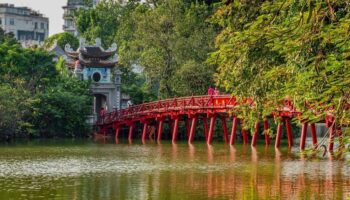

The Complex of Hue Monuments represents the pinnacle of Vietnam’s imperial heritage and stands as the country’s first UNESCO World Heritage Site. Located in and around Hue City, this remarkable complex preserves the legacy of the Nguyen Dynasty through its citadel, royal tombs, temples, and ceremonial architecture. Carefully planned according to feng shui and Confucian philosophy, the site reflects both political power and spiritual harmony, offering visitors a profound journey into Vietnam’s royal past.
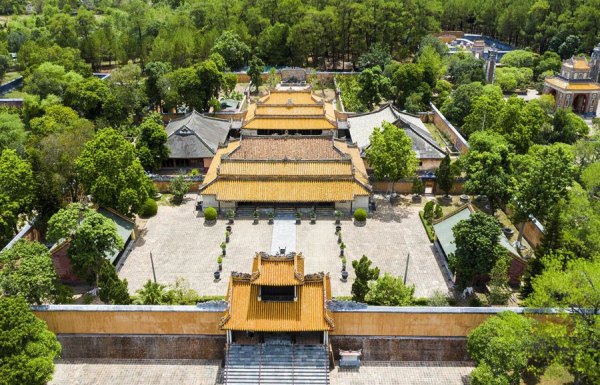
Location of the Complex of Hue Monuments
The Complex of Hue Monuments is located in and around Hue City in the central Vietnamese province of Thua Thien-Hue, along the banks of the Perfume River. The site encompasses a wide range of monuments within and outside the main citadel area.
Primary Location (Hue Citadel)
The central part of the complex, including the Imperial City and Forbidden Purple City, is situated on the northern bank of the Perfume River in the city center.
- Address: 23 August Street, Phu Xuan district, Hue City, Vietnam.
How to get to Hue
Getting to Hue, the ancient capital of Vietnam, is most commonly done via plane, train, or road. The city is served by Phu Bai International Airport (HUI), located about 15 km (30 minutes) from the city center.
By Air (Fastest)
Domestic flights arrive daily at Phu Bai Airport from major Vietnamese hubs. There are currently no direct international flights; travelers from abroad typically connect through Hanoi or Ho Chi Minh City.
- From Hanoi (HAN): Flights take approximately 1 hour. Major airlines include Vietnam Airlines and VietJet Air.
- From Ho Chi Minh City (SGN): Flights take about 1.5 hours.
- Airport Transfer: From the airport, you can take a taxi (approx. 250,000 VND), a motorbike taxi (approx. 120,000 VND), or a shuttle bus (50,000 VND, though availability varies).
By Luxury Train
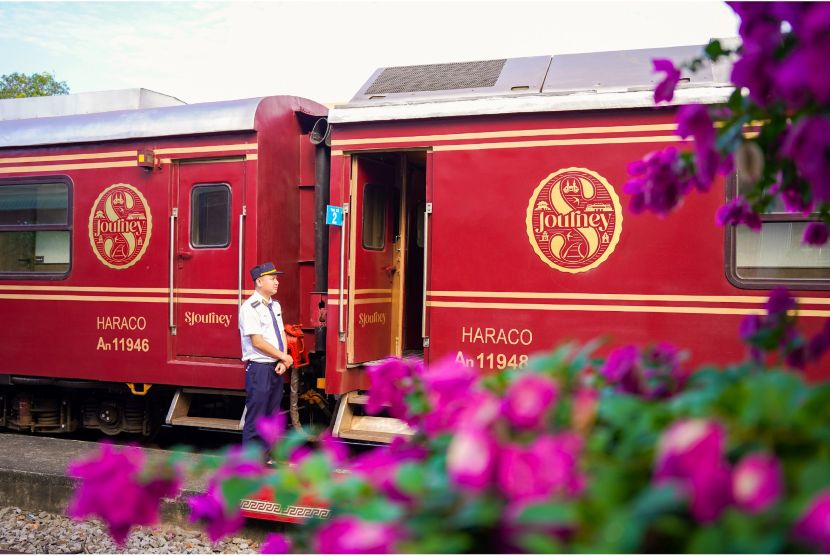
Traveling to Hue by luxury train is a refined and memorable way to experience Vietnam’s breathtaking landscapes. One of the most exclusive options is the SJourney Luxury Train, which journeys from Hanoi to Ho Chi Minh City over eight days, with Hue as a highlight stop along the route. This luxury train blends classic Indochine elegance with modern comfort, offering private cabins, gourmet dining, attentive butler service, and curated off-train excursions.
As the train approaches Hue, passengers are treated to stunning views of central Vietnam’s coastline, rivers, and countryside—especially along the famous Hai Van Pass. Arriving by luxury train allows you to ease into Hue’s serene atmosphere, perfectly matching the city’s imperial heritage, ancient citadel, and poetic charm. T
To learn more about this exceptional experience or to secure your seat, contact us direct via hotline (Phone/whatsapp): +84-975-119-466.
By Train (Scenic)
Hue is a major stop on the North-South “Reunification Express” railway line. The Hue Railway Station is centrally located on the south bank of the Perfume River.
- From Da Nang: This 2.5 to 3.5-hour journey is famous for its stunning coastal views as it passes through the Hai Van Pass.
- Heritage Train: A specialized “Connecting Central Heritage Train” operates between Da Nang and Hue specifically for sightseeing.
- Booking: Tickets can be purchased at stations or online via the official Vietnam Railways portal.
By Road (Flexible & Budget)
- Bus: Both public and “open tour” sleeper buses connect Hue to nearby cities like Da Nang (2-3 hours), Hoi An (3-4 hours), and Hanoi (12-14 hours).
- Private Car/Taxi: You can hire a private car for a more flexible itinerary, especially from Da Nang or Hoi An, allowing you to stop at scenic points like Lang Co Beach or Lap An Lagoon.
- Motorbike: Adventurous travelers often ride a motorbike from Da Nang over the Hai Van Pass (approx. 3-4 hours). Rental services frequently allow one-way rentals where you can drop the bike off in Hue.
>>> Discorver: Heritage Hue: The Ultimate Guide to Vietnam’s UNESCO World Heritage Sites
History of the Complex of Hue Monuments
Established in 1802 as the capital of a unified Vietnam, the Complex of Hue Monuments served as the nation’s political, cultural, and religious heart until 1945. The site is a rare example of a complete, defended feudal capital in East Asia, meticulously planned according to ancient geomantic principles.
Historical Development
- 1802 – 1840 (Planning and Foundation): Emperor Gia Long, the first of the Nguyen Dynasty, moved the capital from Hanoi to Hue. He authored the original master plan, integrating nature (Ngu Binh Mountain and the Perfume River) with architectural structures.
- 1841 – 1883 (Completion and Refinement): Successors Emperor Minh Mang and Emperor Tu Duc completed the massive construction, which involved moving millions of cubic meters of earth and digging extensive moats and canals.
- 1889 – 1945 (Renovation and Transformation): Later emperors, such as Khai Dinh, introduced new architectural transformations, blending traditional Vietnamese styles with Western influences.
Must-Visit Attractions in the Complex of Hue Monuments
Below is a comprehensive, traveler-friendly guide to the Must-Visit Attractions in the Complex of Hue Monuments, a UNESCO World Heritage Site and the heart of Vietnam’s Nguyen Dynasty legacy. This is ideal for history lovers, culture explorers, and first-time visitors to Hue.
Hue Imperial Citadel, Imperial City & Forbidden Purple City
Fortress Layout & Design
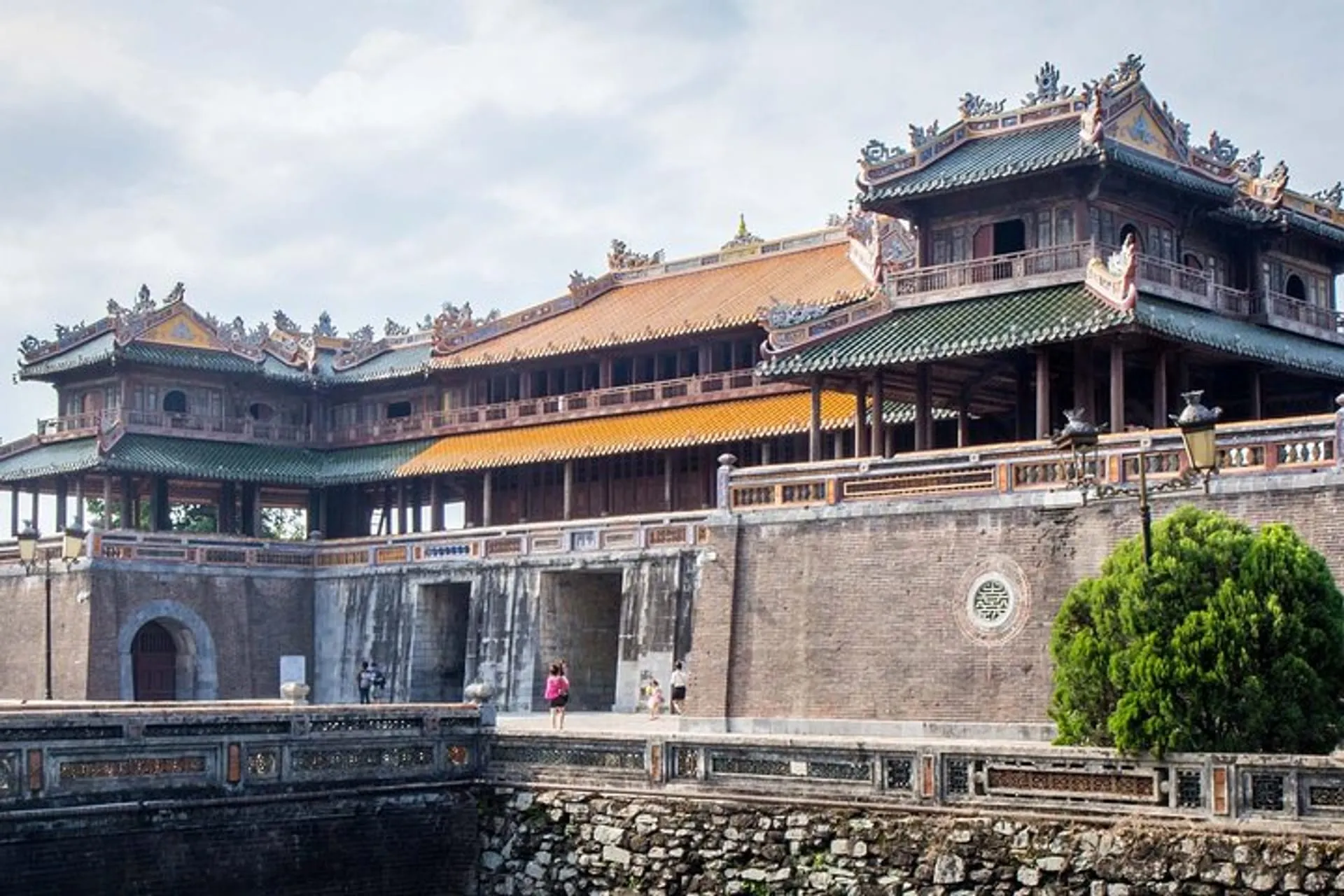
The Hue Imperial Citadel is a massive, square-shaped fortress surrounded by moats, stone walls, and ramparts, inspired by Confucian principles, Feng Shui, and French Vauban military architecture. Inside it lies the Imperial City, and at its core once stood the Forbidden Purple City, reserved exclusively for the emperor and royal family.
Highlights
- Ngo Mon Gate: The grand southern entrance, used for royal ceremonies
- Thai Hoa Palace: Coronation hall featuring lacquered columns and imperial dragons
- Royal Halls & Gardens: Spaces for governance, worship, and court rituals
Historical Role
From 1802 to 1945, this complex served as the political, cultural, and administrative center of Vietnam under the Nguyen emperors.
Thien Mu Pagoda (Pagoda of the Celestial Lady)
Iconic Features
- Seven-story Phuoc Duyen Tower, symbol of Hue
- Overlooks the Perfume River, especially beautiful at sunset
History & Legend
According to legend, an elderly woman (the Celestial Lady) foretold the construction of a pagoda to bring prosperity. Built in 1601, Thien Mu became Hue’s most important Buddhist center.
Best Photo Spots
- Riverbank below the tower
- Garden paths framing the pagoda
- View from a dragon boat on the Perfume River
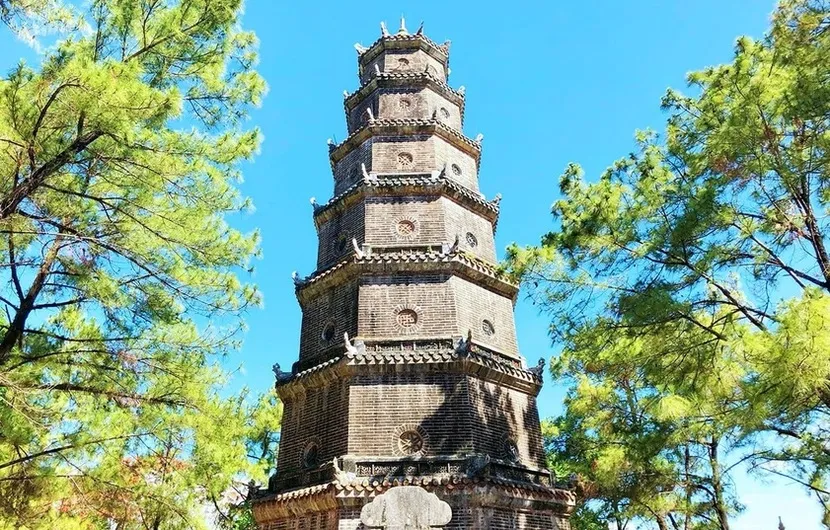
Tu Duc Tomb (Mausoleum of Emperor Tu Duc)
Why It’s Special
Often called the most romantic royal tomb, Tu Duc Tomb feels more like a poetic retreat than a burial site.
Architectural Highlights
- Tranquil lakes, pavilions, and pine forests
- Elegant calligraphy and stone carvings
Emperor Tu Duc’s Life
A scholarly emperor with no heirs, Tu Duc used this site as a summer residence, composing poetry, fishing, and reflecting on life—years before his death.
Minh Mang Tomb (Mausoleum of Emperor Minh Mang)
Feng Shui & Symmetry
Considered the most harmoniously designed tomb, perfectly aligned along a central axis.
Key Sites
- Salutation Court: Mandarins’ stone statues
- Stele Pavilion: Inscribed with Minh Mang’s biography
- Imperial Burial Area: Restricted and sacred
Atmosphere
Serene gardens, lotus lakes, and stone bridges make this a peaceful escape.
Other Royal Tombs Worth Visiting
- Gia Long Tomb: Vast, natural setting honoring the Nguyen Dynasty founder
- Thieu Tri Tomb: Smaller, elegant, and rarely crowded
- Dong Khanh Tomb: Transitional architecture blending tradition and modernity
- Duc Duc Tomb: Modest yet historically poignant, honoring a tragic emperor
Best for visitors seeking deeper historical context beyond the main tombs.
Hon Chen Temple
Dedicated to Po Nagar, the goddess of the land
Shows strong Hindu–Cham influences
Hosts vibrant biannual festivals with traditional costumes and river rituals
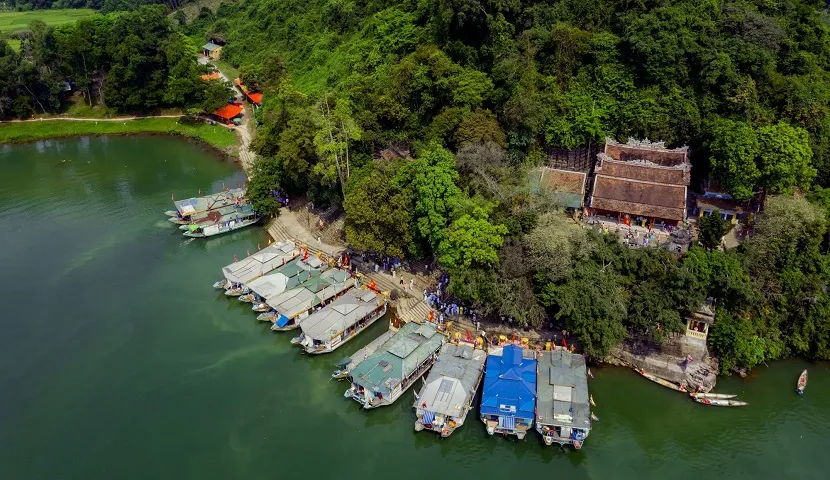
Nam Giao Esplanade
Sacred altar where emperors performed Heaven Worship ceremonies
Symbolized the emperor’s divine mandate to rule
Important spiritual and ceremonial site of the dynasty
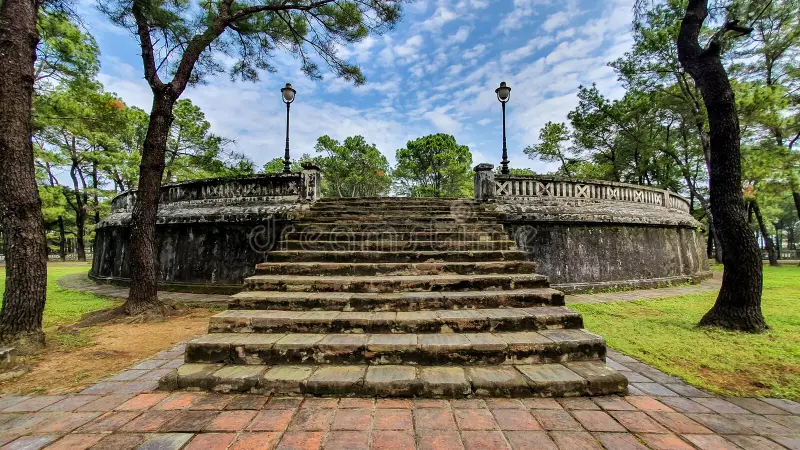
Tiger Arena (Ho Quyen) & Voi Re Temple
Historic arena for royal elephant-tiger combats
Voi Re Temple nearby honors elephants that served the emperors
Offers fascinating insight into royal entertainment and symbolism
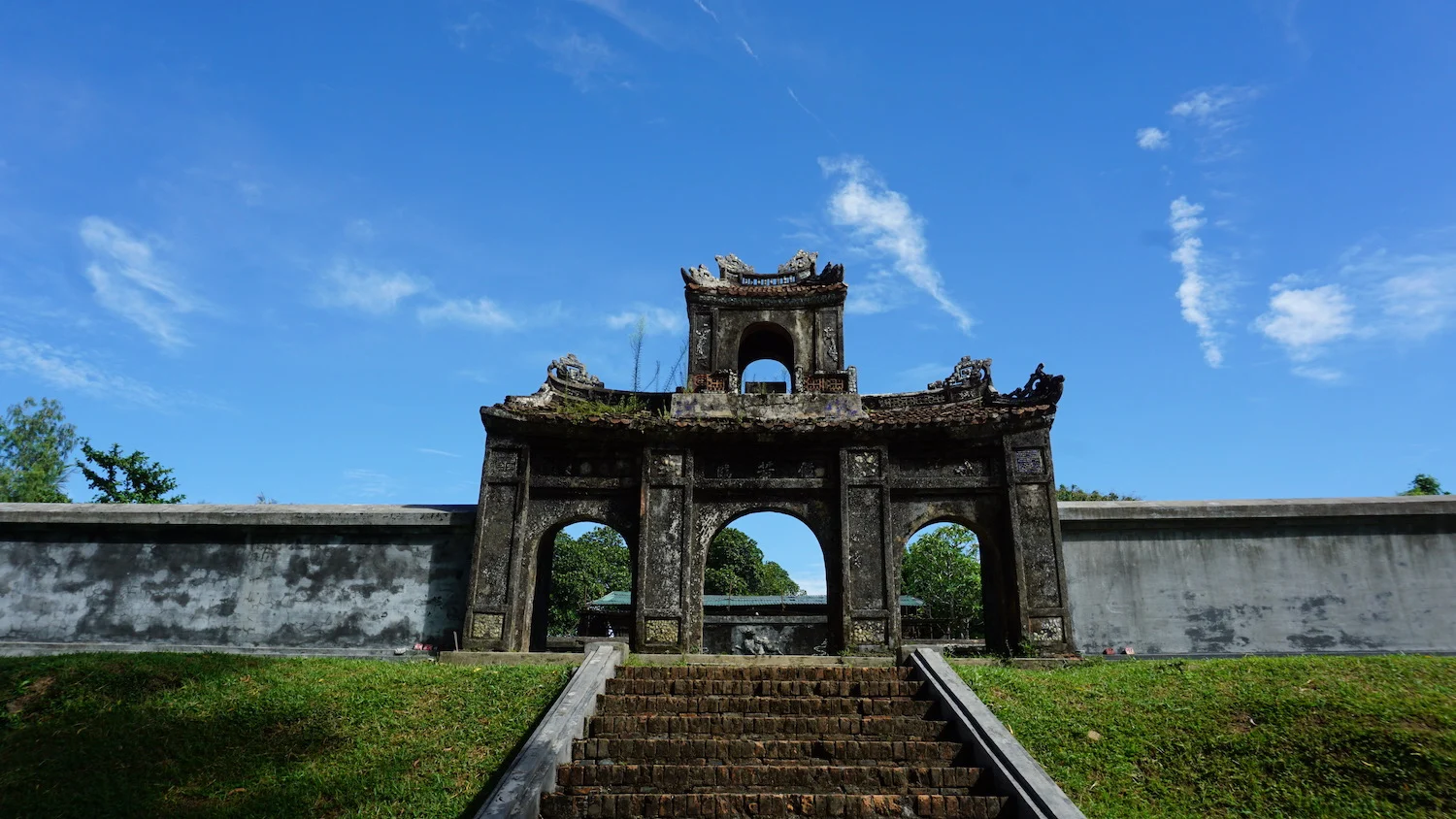
Temple of Literature (Van Mieu) & Temple of Military (Vo Mieu)
Cultural Significance
- Van Mieu: Celebrates Confucian scholarship and education
- Vo Mieu: Honors military leaders and martial virtues
Architecture & Role
Elegant courtyards, altars, and traditional roofs reflect the balance between knowledge and strength in imperial Vietnam.
>>> Read more: Discover Top Hue Tourist Attractions in 2026: The Ultimate Travel Guide
How to Visit the Complex of Hue Monuments
Ticket Options & Prices
Combo tickets, valid for up to two consecutive days, offer significant savings if you plan to visit multiple attractions. Tickets can be purchased with cash or credit card at the ticket counters located in front of each monument or online through the Hue Monuments Conservation Center website.
| Venue(s) | Adult Price (VND) | Children (7-12 years) (VND) |
| Single Site: Hue Imperial City | 200,000 | 40,000 |
| Single Site: Minh Mang, Tu Duc, or Khai Dinh Tomb | 150,000 | 30,000 |
| Combo 3 Sites: Citadel + Minh Mang Tomb + Khai Dinh Tomb | 420,000 | 80,000 |
| Combo 4 Sites: Citadel + Minh Mang + Tu Duc + Khai Dinh Tomb | 530,000 | 100,000 |
Opening Hours and Best Time to Visit
The sites are open daily, with slightly different hours depending on the season.
- Opening Hours:
- Summer (March 16 to October 15): 6:30 AM to 6:00 PM.
- Winter (October 16 to March 15): 7:00 AM to 5:00 PM.
- Note: Many sites consistently operate from around 7:00 AM/7:30 AM to 5:30 PM year-round.
- Best Time to Visit:
- Avoid Heat & Crowds: Arrive in the early morning right when the gates open or in the late afternoon for cooler temperatures, fewer tourists, and better light for photography.
- Weather Considerations: Hue’s climate can be intense. The dry season (January to September) is ideal, but the midday heat can be strong, so bring sunblock, a hat, and stay hydrated. The rainy season (October to March) brings cooler weather, though you should be prepared with an umbrella or raincoat.
These guides explain the ticket purchasing options and recommended visiting times for the Hue Monuments complex:
Conclusion
The Complex of Hue Monuments is not only a historical treasure but also a living testament to Vietnam’s imperial identity, architectural mastery, and spiritual traditions. Exploring this UNESCO-listed complex becomes even more enriching when paired with a refined travel experience.
For a seamless and luxurious journey through Hue’s royal legacy, plan your visit with SJourney. Contact Us to begin your unforgettable cultural adventure.
————–
SJourney
Hotline (Phone/whatsapp): +84-975-119-466
Email: inquiry@vietnamluxuryexpress.com

The Travel Story Team is the editorial group behind Vietnam Luxury Express – passionate storytellers and travel enthusiasts dedicated to sharing the art of luxury train journeys across Vietnam.