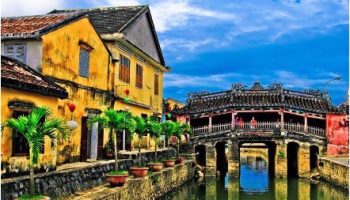
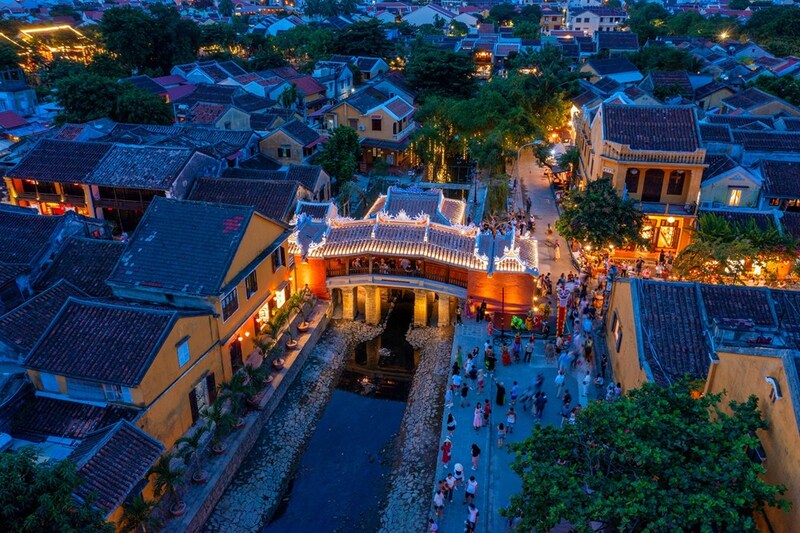
When people think of Hoi An, images of lantern-lit streets, ancient houses, and the gentle flow of the Hoai River often come to mind. Yet for international travelers, one landmark stands out as the true visual icon of the town: Cau Pagoda Hoi An, also widely known as the Japanese Covered Bridge.
What makes this pagoda truly fascinating is that, despite its name, it is not a Buddhist pagoda. There is no Buddha worship, no resident monks, and no traditional temple layout. Even more remarkably, this unique structure is featured on Vietnam’s 20,000 VND banknote, elevating it from a local attraction to a national cultural symbol.
Is Cau Pagoda Hoi An Not a Typical Pagoda?
Unlike traditional Buddhist pagodas found throughout Vietnam, Cau Pagoda Hoi An was never established as a place for Buddhist worship. There are no Buddha statues, no monks in residence, and no formal Buddhist ceremonies taking place here. This often surprises first-time visitors who naturally associate the word “pagoda” with Buddhism.
Historically, the term “pagoda” in Vietnam was used more broadly to describe sacred or spiritually significant structures, not strictly Buddhist temples. In the case of Cau Pagoda Hoi An, the name reflects its perceived spiritual importance rather than its religious affiliation. The structure was conceived as a protective and symbolic space, designed to bring balance and safety to the surrounding community rather than to serve religious doctrine. 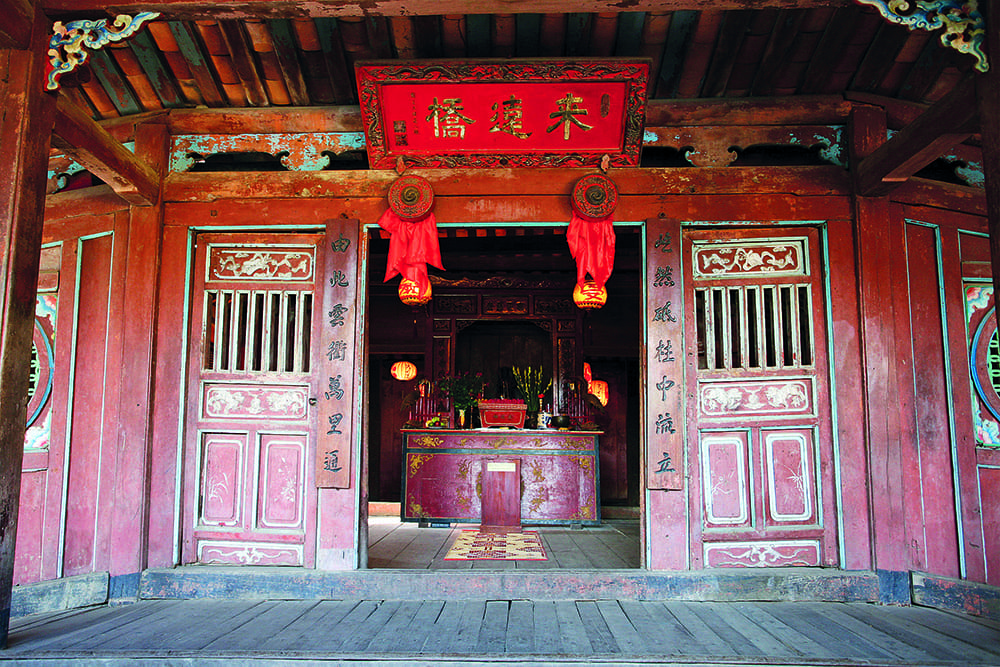
This distinction is crucial. Cau Pagoda belongs to the realm of folk belief and spiritual symbolism, making it fundamentally different from Buddhist sites such as Quan Am Pagoda. Its identity lies in protection, harmony, and communal well-being, not enlightenment or worship.
The Only Pagoda in Vietnam Built on a Bridge
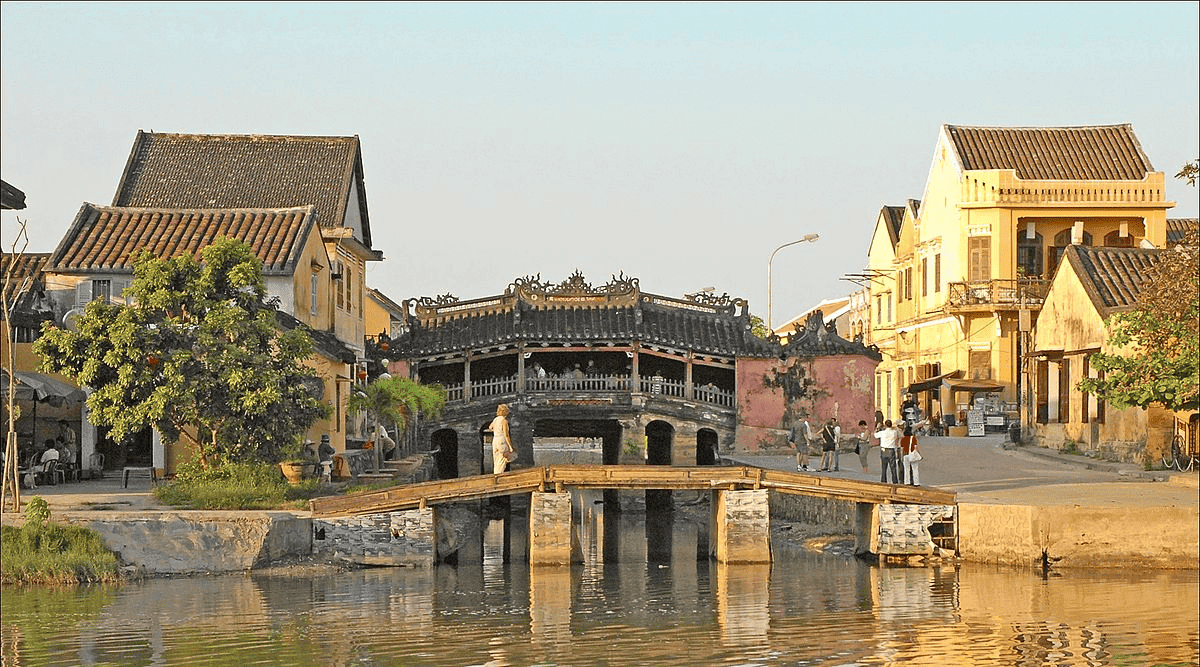
What truly sets Cau Pagoda Hoi An apart from any other sacred structure in Vietnam is its physical form. It is built directly on top of a bridge, spanning a narrow canal that once marked the boundary between different residential quarters of the ancient town.
This architectural decision was not merely aesthetic. At the time of construction, Hoi An was a thriving trading port where daily movement between neighborhoods was essential. The bridge provided practical connectivity, allowing merchants and residents to cross easily, while the shrine-like space above served a symbolic role—protecting the town from natural threats, particularly flooding.
The fusion of infrastructure and spirituality reflects the pragmatic worldview of the town’s early inhabitants. In Cau Pagoda, functionality and belief are inseparable. The structure embodies the idea that daily life, commerce, and spiritual protection can coexist within a single architectural form, a concept rarely seen elsewhere in Vietnam.
Japanese Architectural Influence Behind Cau Pagoda Hoi An
Cau Pagoda in Hoi An stands as a tangible reminder of the Japanese community that once flourished in Hoi An during the early 17th century. At that time, the town was an important international trading port, attracting merchants from Japan, China, and Europe.
Japanese builders brought with them construction techniques and design principles that emphasized balance, durability, and harmony with the surrounding environment. These principles are evident in the pagoda’s wooden framework, which relies on precise joinery rather than excessive ornamentation. The gently curved tiled roof is both functional—protecting the structure from heavy rain—and symbolic, reflecting East Asian concepts of balance and shelter. 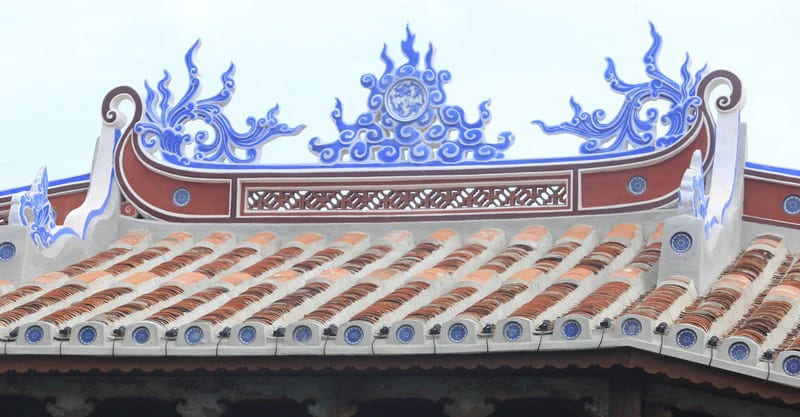
Because of these unmistakable characteristics, Cau Pagoda is often referred to internationally as the Japanese Covered Bridge. More than a nickname, this term acknowledges the bridge as a cultural artifact that preserves the architectural language of Japan within the Vietnamese urban landscape.
Who Is Worshipped Inside Cau Pagoda Hoi An, If Not Buddha?
Inside Cau Pagoda, visitors will not find images of the Buddha or Bodhisattvas. Instead, the central figure honored here is Bac De Tran Vo, a deity associated with water, land, and protection in East Asian folk belief.
This choice reflects the historical realities of Hoi An as a riverside trading town. Seasonal floods posed a constant threat to homes, livelihoods, and trade routes. Worshipping Bac De Tran Vo was a way for the community to seek protection from natural disasters and to maintain harmony between human activity and the natural environment. 
The presence of this deity reinforces the idea that Cau Pagoda Hoi An functions as a spiritual guardian rather than a religious institution. It represents collective hope and respect for natural forces, further distinguishing it from Buddhist pagodas focused on personal enlightenment or ritual practice.
Cau Pagoda Hoi An on Vietnam’s 20,000 VND Banknote
Being featured on national currency is one of the highest forms of cultural recognition, and the pagoda holds this rare distinction. The image of the bridge appears on the reverse side of Vietnam’s 20,000 VND banknote, a denomination widely circulated across the country.
This choice was not arbitrary. Cau Pagoda Hoi An represents the architectural, historical, and cultural identity of Hoi An Ancient Town—a UNESCO World Heritage Site. By placing it on the banknote, Vietnam acknowledges the bridge as a symbol of heritage, continuity, and cultural exchange. 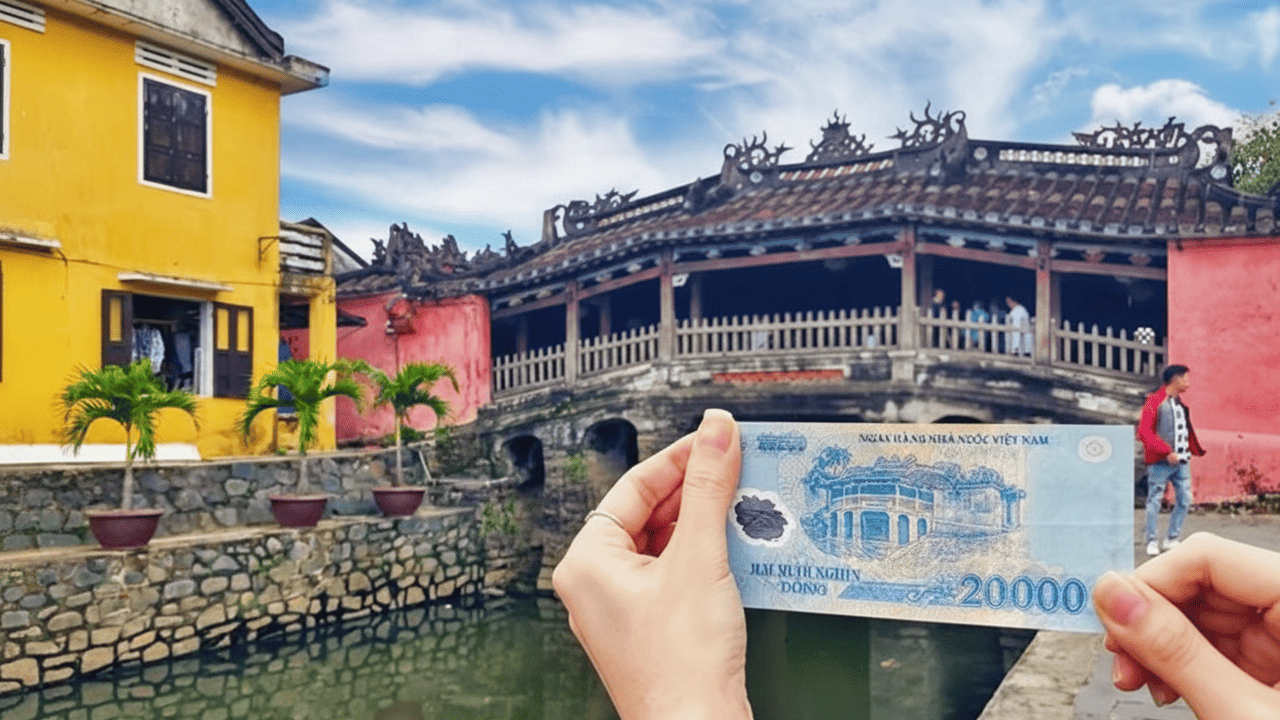
For both locals and travelers, this everyday encounter with the image of Cau Pagoda Hoi An reinforces its status as a national icon, transcending its role as a tourist attraction.
The Monkey and Dog Statues – Symbols Beyond Buddhism
At either end of Cau Pagoda Hoi An, statues of a monkey and a dog quietly stand guard. These figures are not decorative elements nor do they belong to Buddhist symbolism. Instead, they reflect traditional East Asian beliefs related to time, protection, and balance.
According to historical interpretations, the animals may correspond to the years of the lunar calendar in which construction began and ended. Others believe they function as guardian figures, protecting the bridge and the community it connects. Regardless of interpretation, their presence adds another layer of meaning to Cau Pagoda Hoi An.
These statues emphasize that the bridge follows its own symbolic system, shaped by folk belief rather than organized religion, reinforcing its singular identity within Vietnam’s architectural heritage. 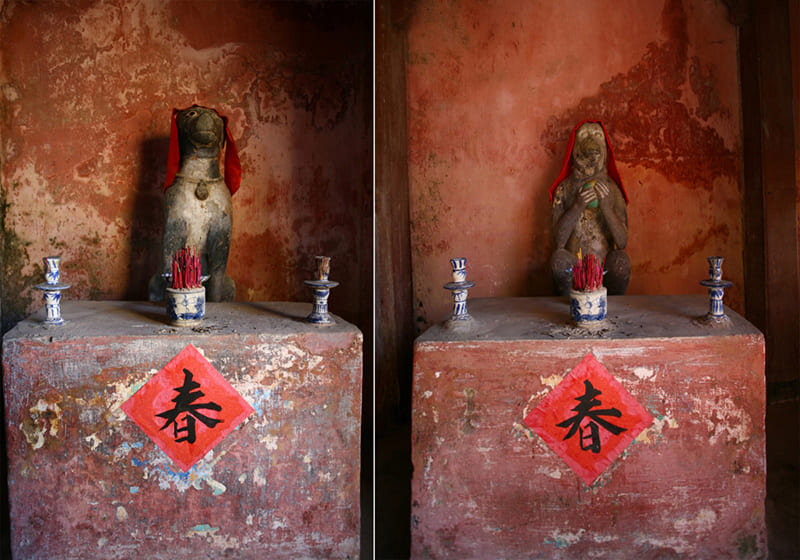
Why Cau Pagoda Hoi An Became the Icon of Hoi An Ancient Town
Cau Pagoda Hoi An is not the largest structure in the ancient town, nor is it the most ornate. Yet it has become the most recognizable image of Hoi An in international media and travel literature.
Its power lies in simplicity and symbolism. The bridge embodies the town’s multicultural past, its relationship with water, and its ability to harmonize different influences into a coherent whole. For visitors, a single image of Cau Pagoda Hoi An instantly communicates the essence of Hoi An—historic, peaceful, and culturally layered.
This is why the bridge has transcended its physical form to become a visual and emotional symbol of the town itself.
Experiencing Cau Pagoda Hoi An Beyond a Photo Spot
In an age of fast travel and social media, Cau Pagoda Hoi An is often reduced to a brief photo stop. Yet its true value emerges only when visitors slow down.
Crossing the bridge at different times of day reveals subtle changes in light, sound, and atmosphere. In the evening, lantern reflections shimmer on the water, and the bridge feels less like a monument and more like a living passage through time.
These moments invite reflection rather than consumption, reminding travelers that Cau Pagoda Hoi An is best experienced as part of a slower, more mindful journey.
Cau Pagoda Hoi An is not a Buddhist temple, nor is it merely a bridge. It is a one-of-a-kind heritage structure shaped by Japanese architecture, Vietnamese folk belief, the global history of Hoi An as a trading port.
To fully understand destinations like Cau Pagoda Hoi An, travelers are encouraged to embrace slow, meaningful journeys.
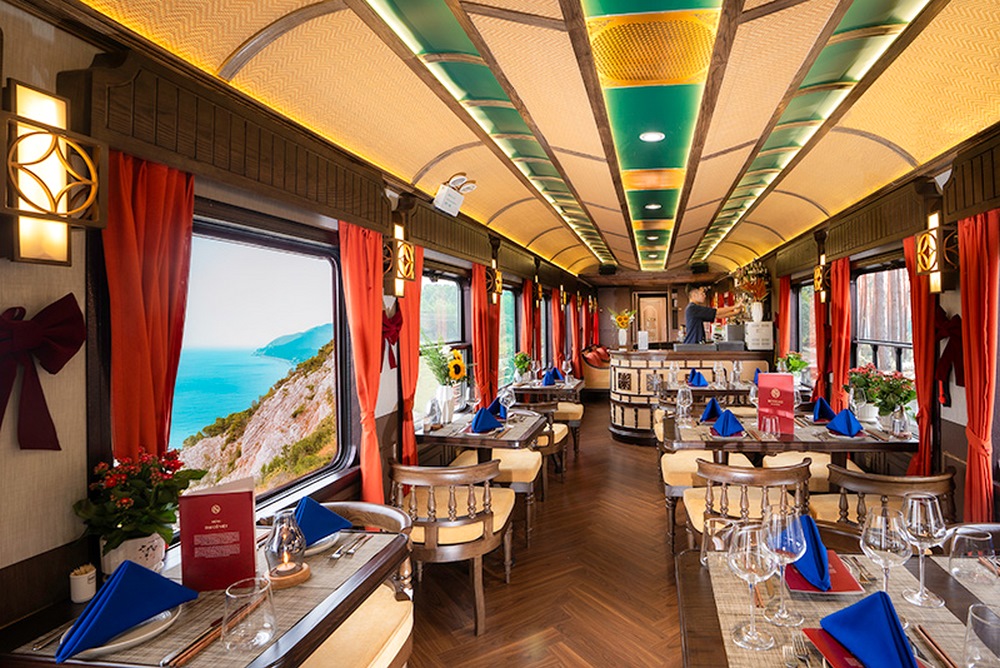
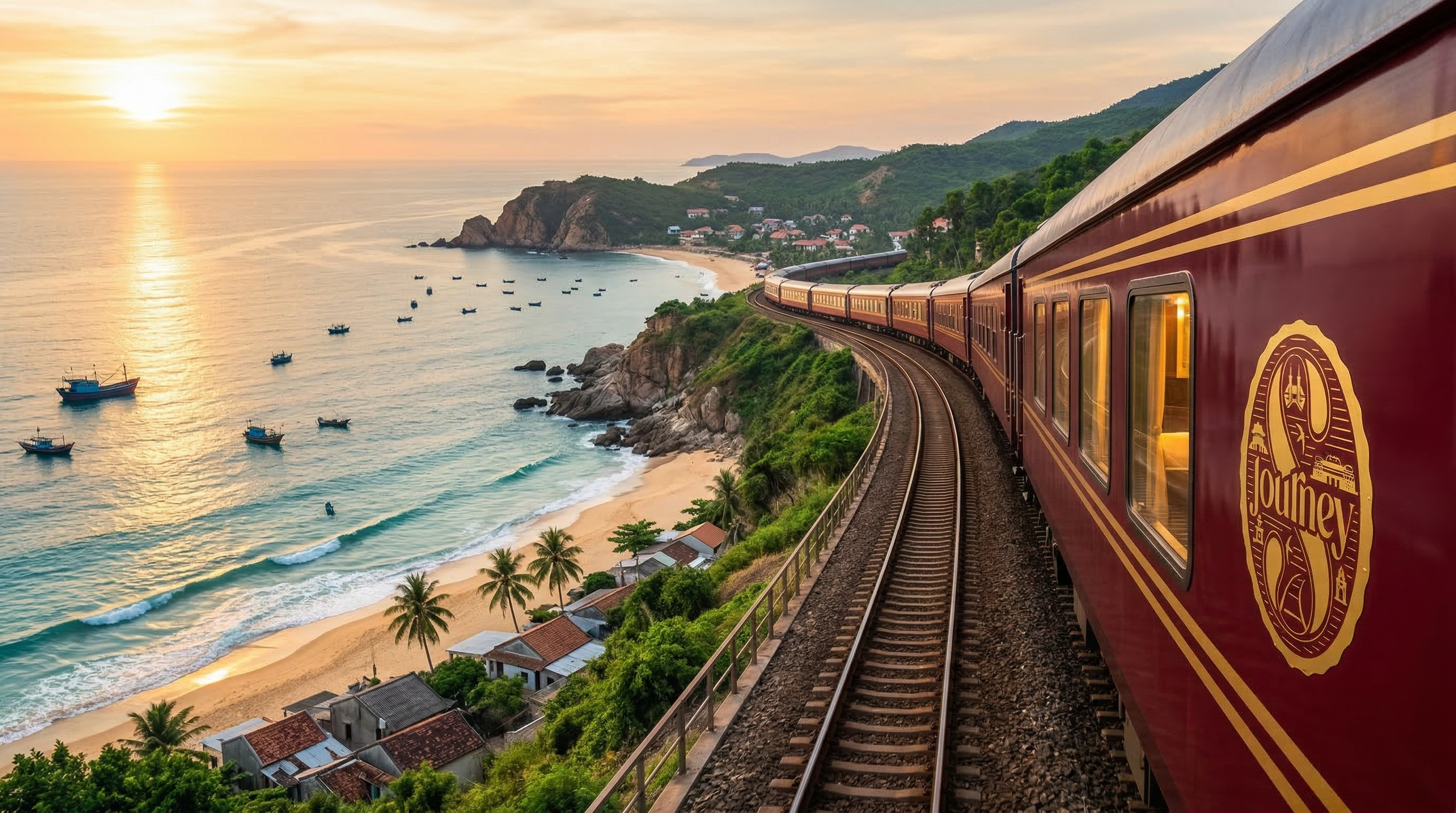
Sjourney Train offers a refined way to explore Vietnam’s heritage destinations, where travel is not just about reaching a place, but about connecting deeply with history, culture, and timeless values.
————–
SJourney
Hotline (Phone/whatsapp): +84-975-119-466
Email: inquiry@vietnamluxuryexpress.com
Head office: No. 15/52 Giang Van Minh, Ba Dinh, Hanoi

The Travel Story Team is the editorial group behind Vietnam Luxury Express – passionate storytellers and travel enthusiasts dedicated to sharing the art of luxury train journeys across Vietnam.